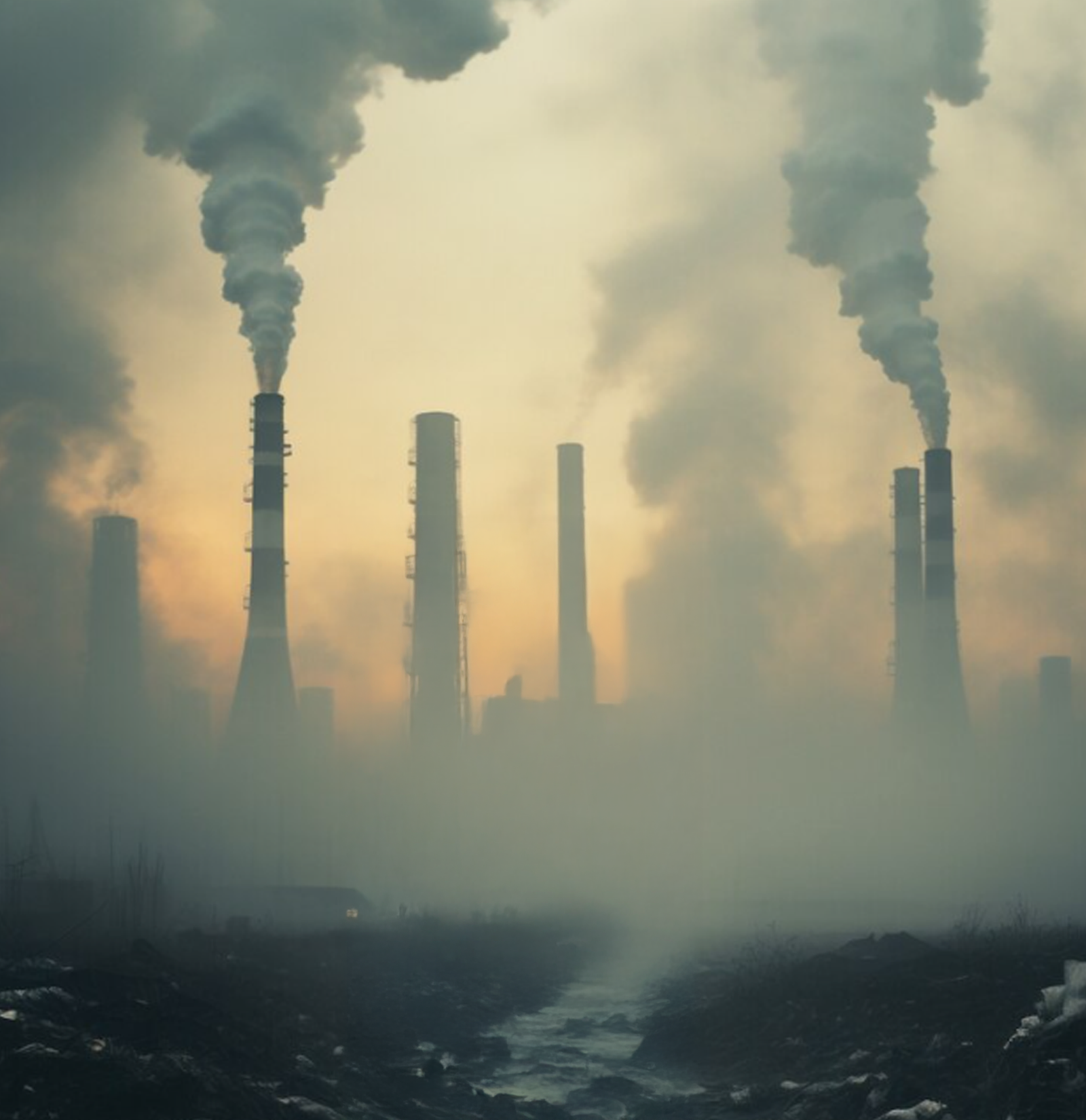


Every winter, news across India fills with images of smog-covered skylines and headlines about Delhi’s “severe” air. It is easy to think pollution is a seasonal problem. In fact, winter mostly makes visible what is in the air all year, and the main reason is a weather effect called thermal inversion.
Thermal inversion: a lid on the city
Normally, air gets cooler as you go higher, so warm air near the ground rises and carries pollutants up and away. In a thermal inversion this pattern is reversed: a layer of warmer air sits above cooler air near the ground.
This often happens on winter nights, when the ground cools quickly and chills the air just above it. The warm layer above acts like a lid, stopping the cooler, polluted air below from rising and dispersing. As winter deepens, the inversion height comes down, so larger concentrations of pollutants hang closer to the ground, and the AQI worsens.
The Indo-Gangetic “pollution bowl”
Geography makes it worse. The Indo-Gangetic Plains, bordered by the Himalayas, form a basin with low wind speeds. Pollutants from vehicles, industry, road dust, waste burning and crop residue burning collect here instead of blowing away, creating a pollution bowl over northern India.
After the monsoon withdraws, prevailing winds shift to the north-west and can carry dust, smoke and other pollutants from far beyond India’s borders into the same bowl.
How the city traps its own air
Urban design adds to the problem:
- Building downwash: wind striking tall buildings is deflected downwards, pulling pollutants into the low-pressure zone at street level where people breathe.
- Street canyons: streets lined with tall buildings limit natural ventilation, so vehicle emissions accumulate.
- The canopy effect: dense tree canopies along streets can reduce airflow and trap pollutants beneath them.
- Urban heat islands: concrete stores heat and alters air circulation, trapping pollutants and promoting the formation of secondary pollutants such as ozone.

A year-round problem
When the smog lifts in spring, the danger does not disappear. The same sources keep emitting; the air simply disperses them better, so the pollution is less visible. Many pollutants, from ozone to ultrafine particles and VOCs, cannot be seen at all. That is why air pollution in India is best understood as perpetual, not seasonal.
- Thermal inversion traps polluted air near the ground on winter nights.
- The Indo-Gangetic basin and low winter winds keep pollutants from dispersing.
- Tall buildings, street canyons and dense canopies trap pollution at street level.
- Winter makes pollution visible; the exposure continues all year.
Protecting yourself
Closing windows does not keep winter smog out, because fine particles and gases leak into every building. What makes a real difference is the number of hours you spend in genuinely clean air. An isolated, pressurised, filtered space such as the AIRSHIP gives your body that respite while you sleep, work or rest.
Explore all 10 reasons for toxic air in India to understand how these factors combine.
The AIRSHIP is not a medical device and does not treat or cure any disease.
Want to know how the AIRSHIP creates a pollution-free space at home?
Arrange your exclusive consultation